
Most search results never get clicked. Over half of all Google searches now end without a single click. The user got their answer right on the search page.
This is zero-click search. It’s the result that lives at position zero, between the sponsored and organic results, usually filled by Google’s AI Overview, a featured snippet, or the local pack. It hands users the answer instantly without sending them to your site.
Whether you think position zero is fair or not, it is here to stay. Many people now believe traditional informational content is dead, since users no longer have to click through to find what they need. The reality is more nuanced, especially for local businesses.
This article walks through what zero-click search actually is, why it matters for local businesses, what is working, what is not, and what to do about it. By the end, you will have a clearer view of how to use zero-click search to build a strong first impression and position your business as the trusted authority in your local market.
What is Zero Click Search
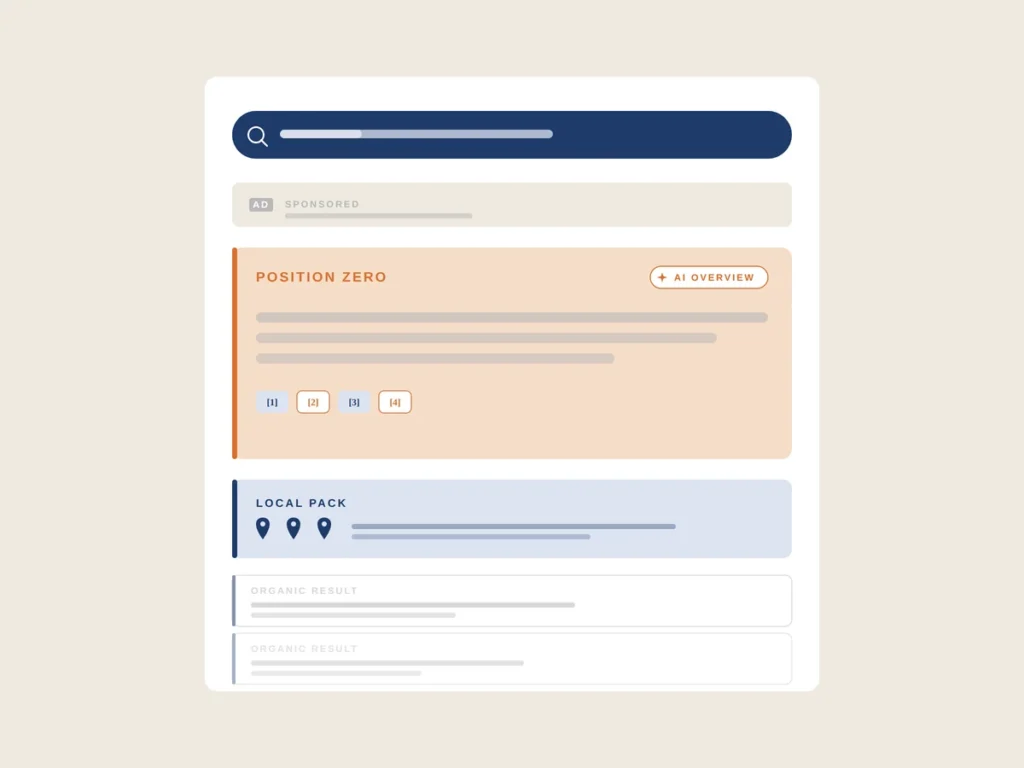
Zero-click search happens when a user types a query into Google and gets their answer directly from position zero, without clicking any link. This position is occupied by featured snippets, AI Overviews, Google Business Profile cards, knowledge panels, and the local pack.
The trick is that zero-click results pull information from indexed pages to fill out the answer. In that sense, it’s similar to an AI citation. You may have written quality content and ranked well for it, but if the answer shows up at position zero, many users never scroll past it.
Here is the good news for local business owners. According to a Searchlab study, AI Overviews have the lowest impact on local search results. Instead, the local pack dominates these queries. That is where local businesses can win.
The bad news is the same study found that more than half of all search results end in zero clicks. With over 8.5 billion Google searches happening every day, that is a massive chunk of users who never visit your website at all.
In the next section, I will break down exactly how this affects local business sites and what it means for the future of optimizing your business online.
Why Zero-Click is Especially Bad For Local Business Sites
Local businesses may be less affected by AI Overviews, but that exposure gets traded for the local pack instead. The local pack delivers most of the visible answers for “near me” searches. Even when it isn’t shown, AI Overviews surface service information and pricing, and review snippets and star ratings appear before a user clicks anything.
The Local Pack Is Where Local Search Actually Happens
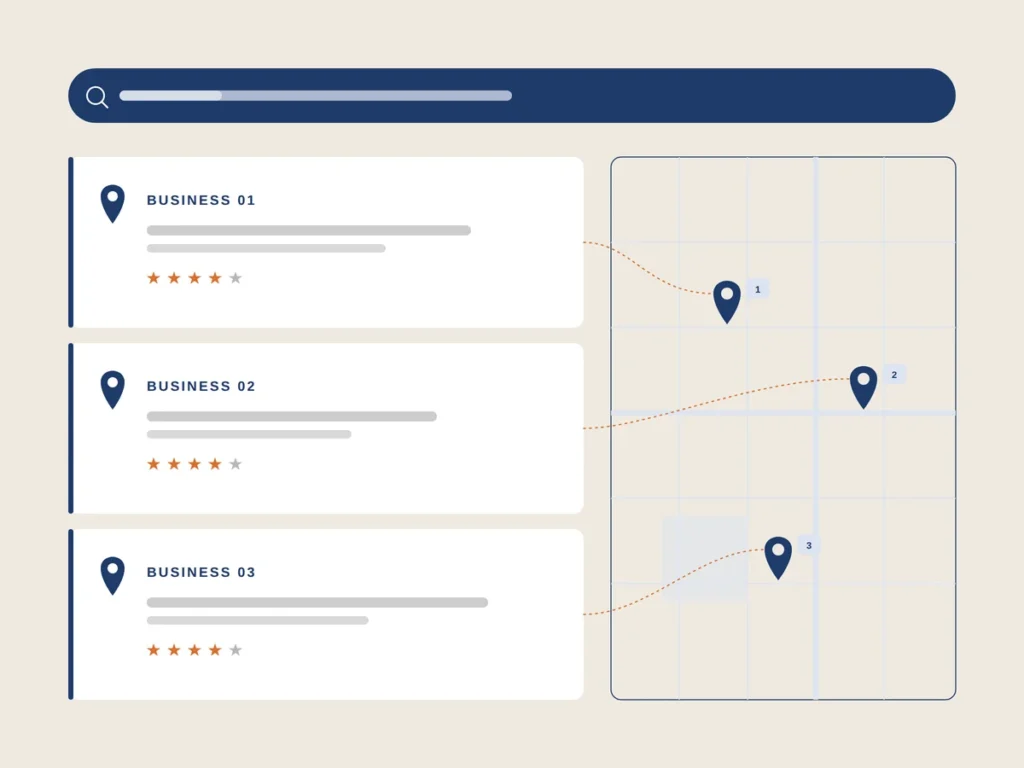
When someone searches “cosmetic dentist Windsor,” they don’t have to dig through service pages to compare options. The local pack already shows three Google Business Profiles next to a map, complete with hours, ratings, and contact info.
According to the Searchlab study, “near me” searches have grown 42% since 2023, and 72% of “near me” queries result in zero clicks because of the local pack. People rely on Google more than ever, and that makes sense. When someone searches for a local business, they aren’t browsing. They are close to a purchase decision.
We tend to assume customers will explore options and look beyond the recommendation. They don’t. People trust Google more than they trust you. In an era flooded with content and websites that simply exist, your own claims carry less weight. If Google puts you at the top, customers will follow.
AI Overviews Are the New Service Page
Gone are the days of clicking through five websites to compare prices for a service. AI Overviews now aggregate that information and hand users a price range for nearly any service.
This is what AI Overviews do best. They answer top-of-funnel and middle-of-funnel queries that local businesses used to capture with content. Google is consolidating the information layer of the web, and there is little you can do to opt out.
What Zero-Click Search Means for Your Business
A website is no longer enough. Just existing online will only carry you so far. The local pack and AI Overviews mean your Google Business Profile and your reputation across the web matter more than your homepage. Modern search rewards businesses that are recommended and punishes businesses that wait to be discovered.
Zero Click Search Makes Visibility More Important Than Clicks
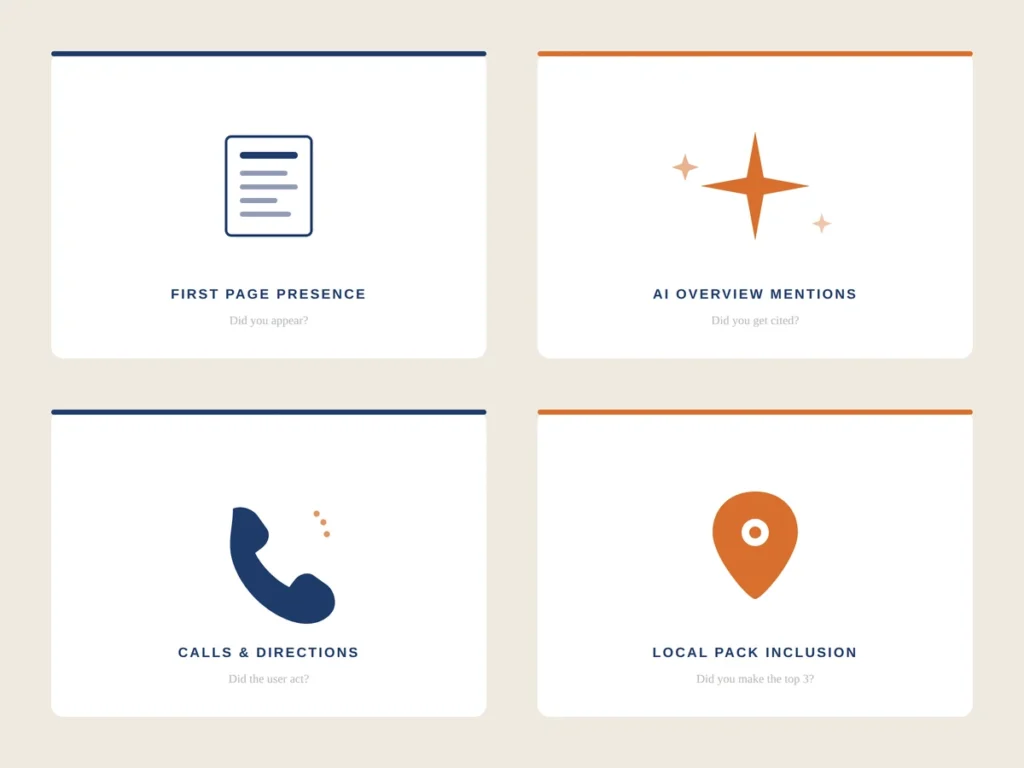
With this shift in how people search, local businesses have to start measuring more than clicks. You have to start measuring visibility. As fewer people click organic results, what matters is where you stand on the search results page itself, not just where you rank.
A few metrics worth tracking in the zero-click era:
- Did your business appear on the first page of search results?
- Did your information appear in the AI Overview?
- Did the user call, message, or request directions?
- Did you appear in the local pack?
All of these are directly influenced by your content, authority, reputation, and schema. I cover these factors in detail in Generative Engine Optimization: How Local Businesses Get Cited by AI Search, where I break down what AI search engines actually weigh when deciding who to recommend.
Just like AI citations, zero-click search rewards businesses that go beyond technical SEO. Public relations, brand mentions, and active reputation management matter as much as a clean website. The work has expanded.
4 Ways to Optimize For Zero Click Search
Here I will outline four ways to start optimizing to show up in position zero and be recommended before your competitors who have only prioritized ranking in the organic search results.
Optimize for Local Pack
This is one of the biggest factors for local businesses and ties directly to high purchase intent searches. The fundamentals are straightforward. Create and fully optimize your Google Business Profile. Make sure your NAP (name, address, and phone number) is consistent across the web, including on local directories. Target real local keywords in your content and your GBP description.
If you only do one thing on this list, make it this one.
Win the Featured Snippet for Your Most Important Questions
Identify the most common questions your target audience actually asks. Build content around them. Add FAQ sections to your service pages. Remember that being cited by an AI Overview still counts as appearing in position zero, and your link often appears right next to the overview itself. Make your content thorough enough that AI sees it as a credible source worth pulling from.
Write Content AI wants to Cite
Thin content always loses to thorough, well-written content. Don’t just answer the question. Add your own perspective, real data, and details specific to your area.
If you are an HVAC contractor in a region with brutal winters, write about how to prepare a home for winter in your specific city. Don’t churn out generic “best of” lists or thin blog posts written to fill space. AI search engines actively filter that kind of content out now.
Make Your Phone Number Clickable From Search Results
This connects back to local pack optimization. Make sure your contact information is easy to find in search results without requiring a click to your website. The time between a user searching for your service and making first contact should be as short as possible. A user should be able to call you, message you, or get directions to you straight from the search results page.
What’s NOT Working For Zero-Click Search
There is a lot of noise about how to win position zero. Most of it is myth or recycled SEO advice from 2018. Here is an honest look at what to ignore.
“Just write more blog posts.” There is a grain of truth here, but the advice gets misapplied. Yes, you should keep writing content with the goal of getting cited by AI. But more is not always better. Google has been actively pushing for fresh, relevant, and high-quality content. Mass-producing thin posts just to hit a publishing quota will hurt you more than it helps.
“Optimize for long-tail keywords.” This isn’t bad advice, just framed in a way that doesn’t drive results anymore. A better approach is to rethink your keyword strategy entirely. Look for high purchase intent keywords your competitors aren’t already ranking for. Real keyword research is your most useful tool in the zero-click era because it shows you the gaps where users are actively trying to buy.
“Run more Google Ads.” Ads do not fix the underlying organic problem. They put a bandage over it. SEO and search engine marketing should work together, not as substitutes for each other. Pouring money into ads while ignoring your organic visibility just makes you dependent on a budget you have to keep refilling.
“Wait for Google to fix it.” This assumes zero-click search is a problem Google wants to solve. It isn’t. Google wins when users stay on Google. If they could cut out the click entirely, they would. Zero-click search isn’t a bug. It is the strategy. Treat it as the new playing field, not a temporary glitch.
How To Track Zero-Click Performance
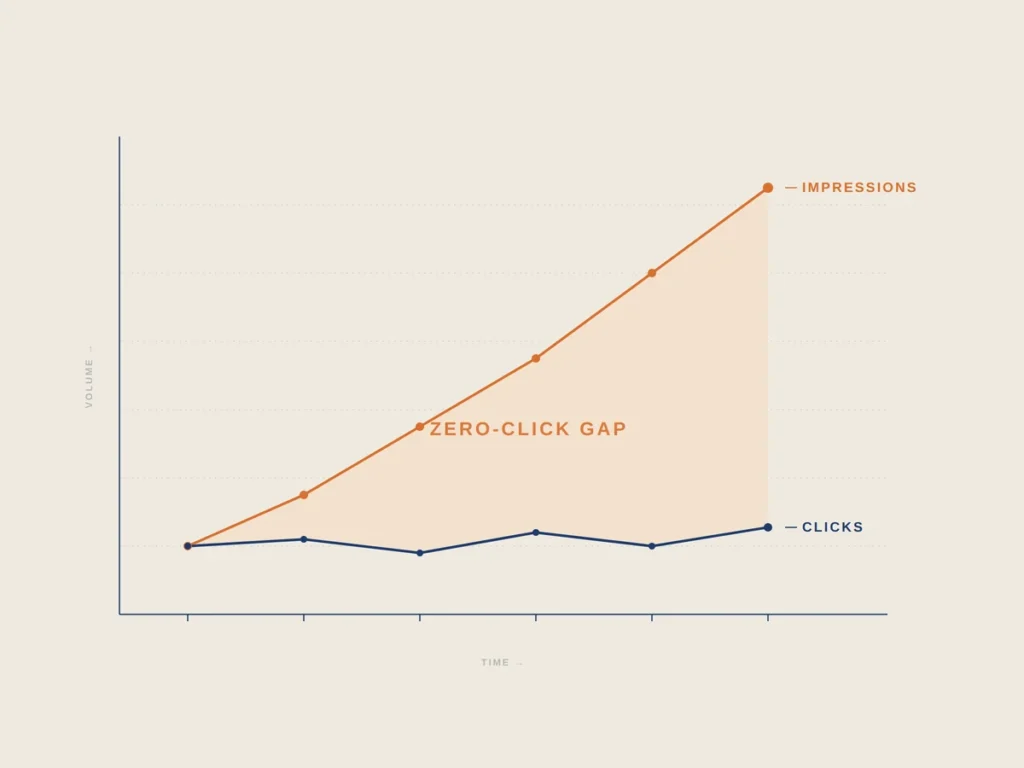
The trade-off Google offers in the zero-click era is access to data. If you use the right tools, you can track how often you are appearing without anyone clicking.
Google Search Console
Solid SEO starts with a strong understanding of your Search Console data. Look at your impression-to-click ratio. If you see impressions rising while clicks stay flat, you have a zero-click problem.
This metric can be misleading though. A flat click rate can also mean a poor title or meta description, which is a separate issue from zero-click search. Look at the queries themselves. If you are showing up for informational searches that AI Overviews now answer, that is the zero-click pattern.
Google Business Profile Insights
This is your strongest tracking tool as a local business. GBP Insights tracks calls, direction requests, and website visits separately. Since your GBP is what shows up in the local pack, these metrics are how you actually measure local pack performance.
Watch for trends across all three. Rising direction requests with flat website visits is a sign that customers are engaging directly through search results without ever touching your site. That is zero-click working in your favor.
Manual SERP Testing
Search your target keywords manually every month. Note when AI Overviews appear and document what is said about your business or your competitors. This connects directly to your reputation management. AI Overviews function like a service page or homepage you have less control over, so keeping an eye on them is essential.
Key Takeaways for Local Businesses in the Zero-Click Search Era
Zero-click search is not a setback. It is a shift in where attention happens. Local businesses that adapt by becoming the cited source, the recommended option, and the visible answer will win regardless of whether the user clicks.
The work itself hasn’t changed much. Build trust. Build content. Build presence. The metric you measure just has to evolve. Stop counting clicks alone. Start counting visibility, calls, direction requests, and citations. That is where the real signal lives now.
If you want an honest read on how your business shows up in zero-click search and what to fix first, you can reach me at [email protected] or book a free 15 minute call.

Samuel Smusiak is a freelance local SEO and content strategist based in Windsor, Ontario, helping local service businesses show up in Google, Maps, and AI search. Reach out at [email protected].